

Educational Games

A game is not only a way to remember knowledge. It can become a space for studying dialogue and decision-making.

This page introduces three educational games developed with the involvement of Kei Kano and collaborators. Availability, sales and conditions of use may change; please consult the official source for current information.

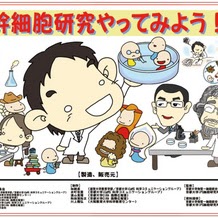
Try Stem Cell Research!

Discover Try Stem Cell Research!

What is the game?

Players become early-career researchers and guide a pluripotent character towards differentiated cells such as neurons and red blood cells. Dice and cards move the research forward, but unexpected events mean that the process does not always proceed as planned.
What can participants explore?

  • Pluripotent stem cells and differentiation
  • Hypotheses, experiments, failure and revision
  • Research funding, papers, conferences and collaboration
  • Research careers and everyday work
  • Ethical and social questions in life science

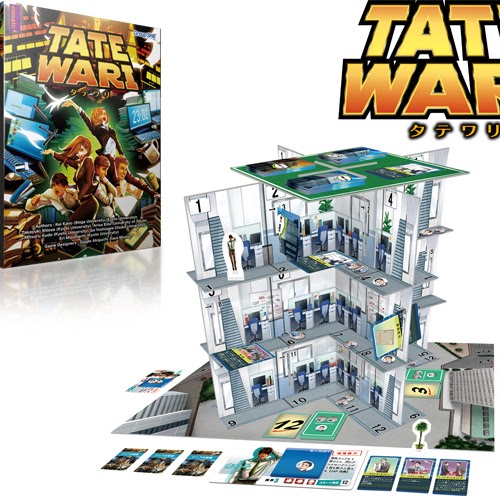
TATEWARI

TATEWARI

What is the game?

Participants take different organisational roles, each with only part of the information. To solve a physical, three-dimensional challenge, they must explain what they know, listen to others and build a shared picture.

What can participants explore?

  • Organisational silos and fragmented information
  • Explanation, listening, checking and sharing
  • The relationship between individual roles and the whole system
  • Leadership and followership
  • Reflection on the process of collaboration

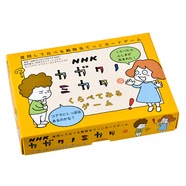
The Comparing Game

NHK Kagaku no Mikata: The Comparing Game

What is the game?

Players use question cards to compare, count, arrange, separate and predict with familiar objects. Prior knowledge is not the main advantage; the game rewards generating questions and explaining differences.

What can participants explore?

  • Observation and comparison
  • Classification and measurement
  • Prediction and evidence
  • Learning from another person’s viewpoint
  • Turning the everyday world into a scientific question

Use in teaching and professional learning

  • Explain the purpose of the game and what to notice beyond winning.
  • Observe questions, explanations, silences and division of roles during play.
  • Reflect on how participants cooperated, not only on what they learned.
  • Discuss similarities and differences between the game and real research, organisations or learning.
  • Invite participants to improve rules or design new cards.

Research opportunities

We welcome PhD projects, JSPS proposals and collaboration in game-based learning, conversation analysis, learning sciences, organisational studies, design, accessibility and international comparison. A research proposal should include participant information, consent and data management.